




Measurement Equipment for Industry, Labs & Field Work
MEGATOP offers measurement equipment for quality control, equipment maintenance, laboratory testing, and field monitoring. As an authorized distributor, we carry handheld meters, gas detectors, precision scales, calibrators, sensors, and surveying instruments from PCE Instruments, Solinst, MRU Instruments, Detecto, Gentec, Weber Sensors, PIE, and Nedo. Compare instruments by measurement range, accuracy, operating conditions, and documentation requirements to find equipment suited to your application.
Applications
- Process and quality control. Instruments such as the PCE Handheld Ultrasonic Flow Meter support liquid flow measurement using externally mounted sensors on compatible pipes.
- Environmental and HVAC monitoring. Climate instruments such as the PCE-G1 monitor humidity and temperature. Gas detectors and combustion analyzers support application-specific testing, inspections, and maintenance.
- Machine condition monitoring. Vibration instruments and sensors such as the PCE-PVS 10 Acceleration Sensor provide measurements used to assess equipment condition and investigate changes in machine performance.
- Weighing and materials testing. Analytical balances, industrial scales, force gauges, and hardness testers support sample measurement, incoming-goods inspection, and product testing.
- Groundwater and environmental field work. Solinst water level meters, interface probes, and dataloggers support monitoring-well applications, with related sampling equipment and accessories available for selected systems.
Product Types
Browse equipment by measurement task and instrument type:
- Meters — instruments for flow, sound, light, moisture, pH, electrical parameters, and environmental conditions.
- Scales & Balances — analytical balances, bench and floor scales, and medical weighing equipment from Detecto and PCE Instruments.
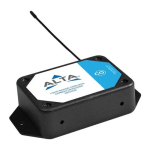
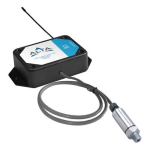
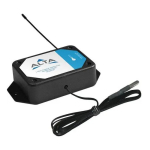
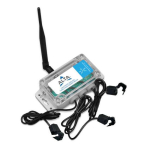
- Sensors & Probes — temperature, level, vibration, and ultrasonic sensing components, including Weber Sensors flow monitors.
- Calibrators and Calibration Test Pieces — equipment and reference pieces for checking supported measurement parameters. Review individual listings for compatibility and included certification.
- Gas Detectors & Analyzers — gas-monitoring instruments and MRU combustion analyzers. Confirm the gases measured, measuring ranges, and intended operating environment before selecting a model.
- Data Loggers & Recorders — instruments for recording measurements over time for documentation and analysis.
- Force Gauges, Hardness Testers, Thickness Gauges, Viscometers — instruments for evaluating material properties and supporting quality-control procedures.
- Surveying Equipment, Borescopes, Thermal Imagers — Nedo levels and lasers, video inspection systems, and thermal imaging equipment for layout, inspection, and troubleshooting.
Industries Served
- Manufacturing and QC labs — weighing, force measurement, materials testing, and calibration equipment for inspection and process control.
- HVAC and energy services — combustion analyzers, airflow meters, and climate instruments for commissioning and maintenance.
- Environmental and groundwater monitoring — water level meters, samplers, and dataloggers for field measurement and long-term monitoring.
- Construction and surveying — levels, lasers, measuring wheels, and inspection instruments for site work and layout.
- Food, pharmaceutical, and healthcare facilities — temperature, moisture, and weighing instruments selected to meet the application’s measurement, hygiene, and documentation requirements.
How to Choose Measurement Instruments
- Compare range, accuracy, and resolution. Select a measuring range that covers your expected conditions, and check the stated accuracy throughout that range. Display resolution alone does not establish measurement accuracy.
- Check certification requirements. Confirm whether your application requires a calibration certificate, traceability documentation, an accredited calibration service, or legal-for-trade approval for weighing equipment.
- Consider data logging. If measurements must be recorded, compare logging intervals, memory capacity, data export options, and software compatibility.
- Plan for calibration. Check what documentation is included and whether calibration must be ordered separately. Establish recalibration intervals according to your procedures, operating conditions, and manufacturer guidance.
- Confirm the complete setup. Review probe compatibility, connections, power requirements, accessories, and environmental limits. Check which components are included and which must be purchased separately.
Need help comparing instruments? Call (888) 634-2867 or email sales@megatop.com with the parameter you need to measure, expected range, required accuracy, operating conditions, and documentation needs. We can help compare product specifications and coordinate manufacturer clarification when needed.
For shipping, minimum order, and discount details, see our Shipping FAQ and Ordering FAQ.